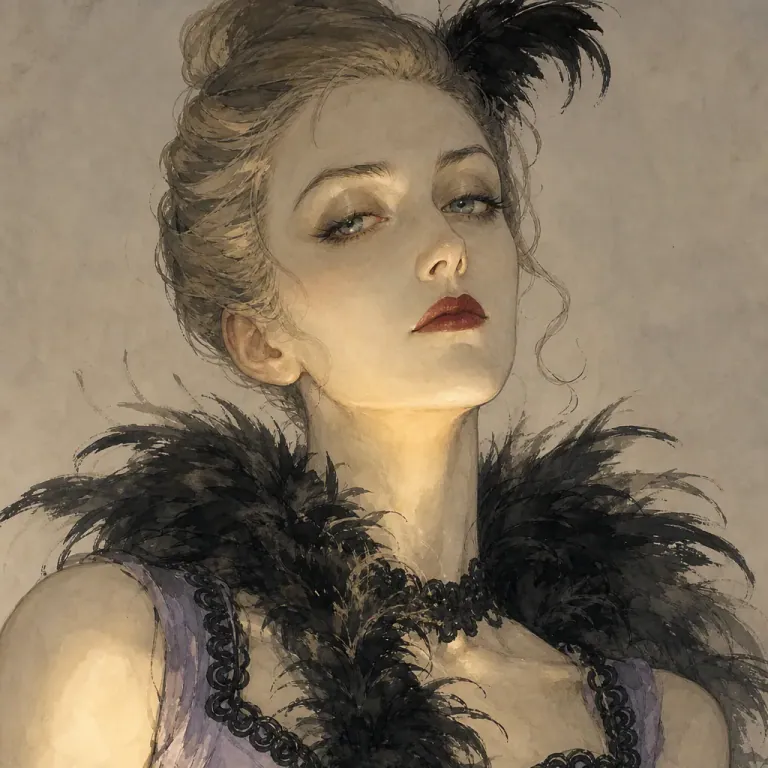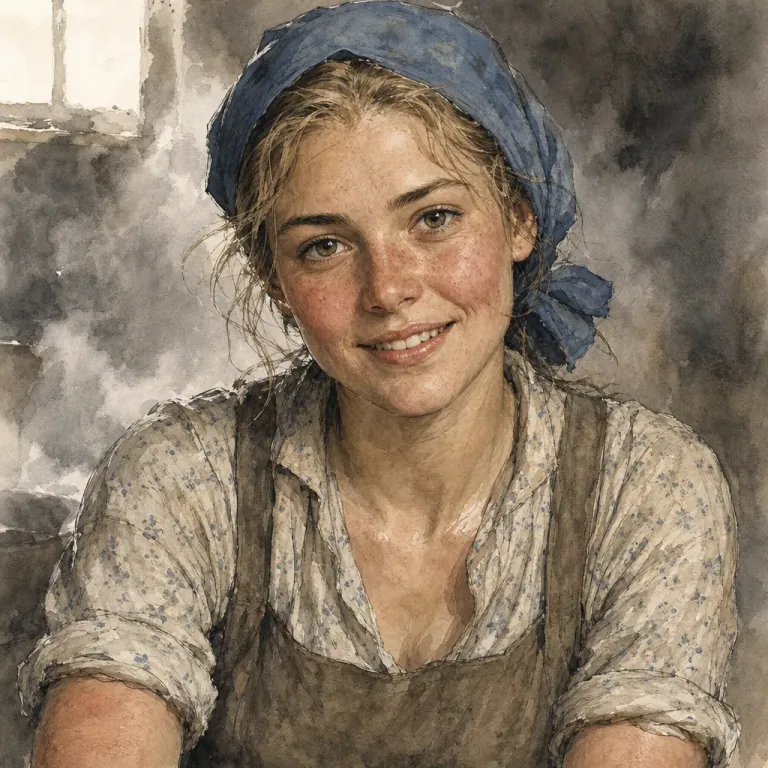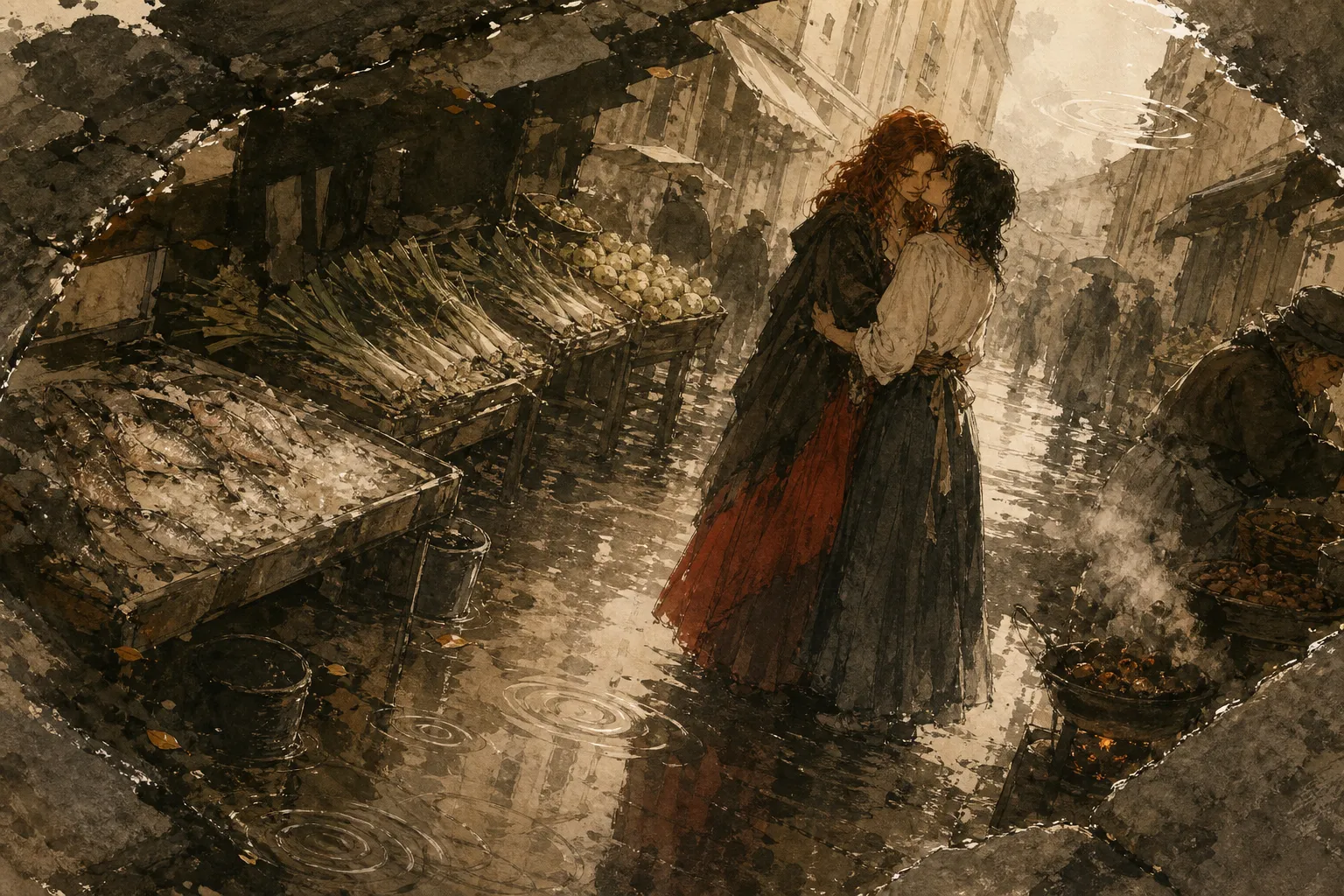

When the last applause at the Moulin Rouge dies out, Odette, the dancer whose name tops the bill, climbs six flights and knocks at the attic door. She names no price and gives no reason; she stands in front of the lamp and sits for me until morning comes. I have the catalogue of the next hundred years memorized whole, and the one thing I know is that her face survives nowhere in it.
Montmartre in the 1890s, where the gaslights burn all night and a painting has to sell before it turns into supper. Madeleine works in a sixth-floor attic no dealer will climb to, and she is the only person alive who remembers what stays in the catalogue a hundred years from now and what disappears from it. At the hour the night ends, Odette, the dancer whose name tops the bill at the Moulin Rouge, comes up the stairs and offers to sit as her model, and never once says what it costs or why she does it. On the canvas she grows clearer every night; once the lamp is out she is still standing a hand's width away. Between the painting that will sell and the painting she wants to make, Madeleine chooses every night what she will leave behind.
- The moment Odette shows you, under the lamp, the face with all the stage paint wiped off, and lets slip exactly one sentence about why she only smiles under the footlights.
- The moment you recall the title of a painting that went for nothing in the catalogue a hundred years from now, and sell that unpainted canvas to the dealer before you have even started it.
- Five in the morning, a wet canvas between you, and Odette pulls her boots back off and says that tonight she is not going down.
 The moment Odette shows you, under the lamp, the face with all the stage paint wiped off, and lets slip exactly one sentence about why she only smiles under the footlights.